
National 17.11.2016 10:13 am
Eric Naki
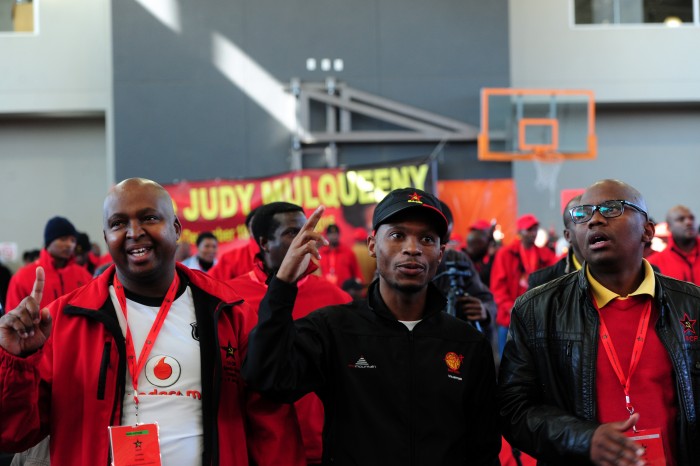
SACP members sing at University of Johannesburg, Soweto, 10 July 2015, on the last day of Congress Rules and Alliance Summit Declaration to the SACP 3rd Special Congress which begun on the 7th - 11 July 2015. Picture: Nigel Sibanda
The SACP suggests the commission must also investigate state capture allegedly by companies such as the Chamber of Mines and the Afrikaans Capital.
The South African Communist Party (SACP) in KwaZulu-Natal says the pending commission into state capture and corruption must broaden its scope to include other corporates beyond the identified capturers.
SACP Moses Mabhida provincial secretary Themba Mthembu said both corruption and corporate capture had altered the political landscape and discourse in South Africa and posed other more serious problems, including factionalism, distortion of internal democracy, patronage and gatekeeping within the formerly like-minded organisations.
Previously, the SACP talked about factionalism, patronage and gatekeeping when it referred to the ANC`s manipulation processes to favour it against its allies.
"The release of the so-called State of Capture report by the former public protector, Advocate Thuli Madonsela, has added another impetus to the state of the nation and national discourse," Mthembu said.
Mthembu suggested the commission must also investigate state capture allegedly by companies such as the Chamber of Mines, the Afrikaans Capital, Naspers and others. Mthembu, however, could not elaborate on how these companies had captured the state. State capture allegations are more often directed at the India-originating Gupta family.
"The report of the former public protector states that its contents must be the basis for an inquiry by a judicial commission. The investigation should therefore be broader than the narrow, yet light-shedding, content of the report," he said.
The SACP provincial executive committee resolved to intensify the struggle against high food prices and the rising cost of living.
"This includes taking up the struggle for affordable, safe and reliable public transport system, water rights and redistribution of land to those who till it. It includes the intensification of the struggle for relevant and accelerated rollout of free basic and higher education for the poor, particularly the campaign to ensure that the rich and the wealthy are taxed to finance not only education but other social wage programmes," Mthembu said.